

Baby Diapers
The Center for Baby and Adult Hygiene Products is the only U.S.-based organization dedicated to advancing the personal absorbent hygiene products industry in North America
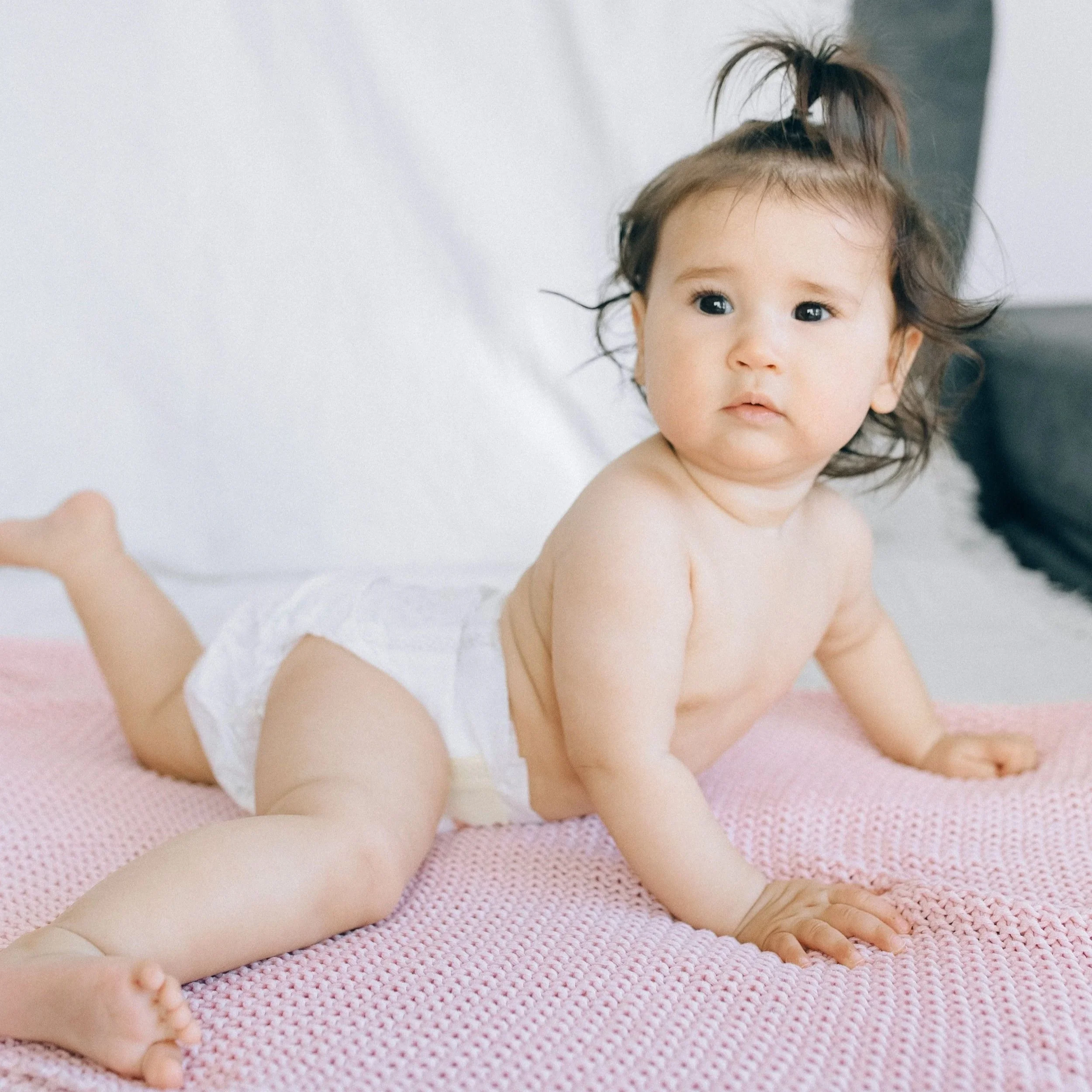
How Diapers Are Made
Disposable diapers are made from materials with a long history of safe use in various everyday consumer products. An average diaper weighs between 1.4 and 1.8 ounces and is primarily composed of cellulose, polypropylene, polyethylene, and a superabsorbent polymer, as well as smaller amounts of tapes, elastics, and adhesives. Advances in material technology have allowed diapers to become lighter, thinner, and meet overall consumer needs.
Since their introduction in the 1960s, disposable diapers have evolved significantly in terms of materials and construction methods to improve their performance, fit, and skin comfort.
To meet diverse consumer needs, the market offers three primary types of diapers: Taped, Pull-On, and Specialty Pants.
Taped Diapers are the most commonly recognized option, featuring adjustable tabs that allow caregivers to customize the fit around the waist. In contrast, Diaper Pants have gained popularity recently, designed with a 360° stretch waistband for enhanced comfort and ease of use.
Parts of a Diaper
Each diaper has two primary parts:
Diaper Core – the middle of the diaper where urine and liquid stool are moved to storage to be locked away from the skin.
Diaper Chassis – the outer shell that holds the core in place and comfortably seals against leaks at the legs and waist.
Diaper Fastening System for Taped Diapers – opens and closes the diaper. Holds the diaper in place and can be refastened to adjust fit.

Diaper Core
The core is primarily composed of polypropylene, cellulose, and a superabsorbent polymer (SAP), which enhance liquid absorption and retention.
Topsheet
The topsheet is the layer in direct contact with the baby’s skin, intentionally designed to quickly transfer fluids to the core while remaining soft and dry to the touch. Some topsheets may include skin-conditioning ingredients, such as those found in diaper skincare products, which can protect the skin from overhydration and reduce irritation.Acquisition/Distribution Layer
This layer is positioned beneath the topsheet. This layer facilitates the movement of liquid away from the baby’s skin and evenly distributes it across the entire diaper core for optimal absorbency.Absorbent Core
The absorbent core is the innermost layer of the diaper. It typically consists of a blend of cellulose fluff pulp and polyacrylate granules. The cellulose absorbs and transfers moisture to the polyacrylate superabsorbent material, where it is trapped and locked away. This keeps the baby’s skin dry, even if he or she sits on a full diaper.
The absorbent core innovation came to market in the 1980s. It resulted in one of the most impactful design improvements to this layer, which was the development of superabsorbent polymers that can absorb many times their weight in fluids. Children’s skin health has improved because these polymers lock moisture away where it cannot irritate skin. The severity and frequency of diaper rash declined dramatically, and as technology has continued to improve, less and less cellulose has been needed. This allows for reductions in diaper weight and volume, resulting in a reduced environmental impact.

Diaper Chassis
The chassis is designed with features that ensure a proper fit and help prevent leakage. It is made up of the backsheet plus additional features that can include stretch side panels, fastening systems and tapes, and leg cuffs.

Backsheet
The backsheet is the water-resistant outer layer that prevents liquids from passing through the diaper and leaking onto the baby’s clothing or surrounding environment. The polyethylene backsheet can be made with a structure that allows water vapor and air (but not liquids) to pass through, reducing moisture and keeping the skin drier.

Fit and Comfort Features
Materials and specific designs that help diapers fit well vary according to manufacturer, but they perform similar basic functions. Important design elements often include stretch side panels and fastening systems that enable the diaper to be pulled snug against the baby’s torso to prevent leakage out of the top. Elastics and cuffs on the diaper’s sides ensure improved fit around the legs and prevent leakage.

Additional Materials
In both the diaper core and chassis, small amounts of adhesives are used to bond component parts together to ensure performance, fit, and structural integrity. Some diapers may also feature designs or scents.
Colors in Diapers
Colors are sometimes added to disposable diapers to enhance the user experience and may serve functional purposes. This could include their use to indicate the diaper’s orientation, highlight the diaper’s functional areas, drive consumer or child interest, or convey diaper wetness. General consumer concerns related to the use of colors in diapers have often been associated with disperse dyes, some of which are known sensitizers. Disperse dyes are synthetic, water-insoluble dyes that are applied to synthetic fibers using a dispersion, where the particles are “dispersed” in another substance. The facts are: Disperse dyes are not used in the disposable diapers manufactured by BAHP member companies. The colors in use are non-irritating and non-sensitizing pigments with favorable safety profiles. Numerous safety tests of pigments used in diapers, such as skin patch tests, have confirmed their safety and have shown no evidence of skin irritation or sensitization. These pigments are commonly and safely used in a wide range of products, including textiles, toys, school chalk and crayons, and food packaging. Through pigment selection and product design, the colors in use are intended to remain bound to the diaper and to provide their intended design and function whether the diaper is wet or dry.
Where are the Colors in the Diaper?
Diapers can have designs on the Outside (Exterior, or Diaper Chassis) and/or the Inside (Interior, or Diaper Core), which may also help designate the superabsorbent areas. Some diapers feature wetness indicators based on colors in the shape of strips or designs that undergo a change in color or fade when the diapers are wet. To help illustrate the difference, refer to the Parts of a Diaper information above.
Outside Use of Colors:
Colors on the exterior of the Diaper Chassis are most often printed on the waterproof, breathable backsheet or the polypropylene nonwoven fiber web that covers the backsheet, which typically is the external-most layer of the diaper. Colors may be printed directly on the front or back surface of the nonwoven web.
Inside Use of Colors:
Like colors applied to the outside layers, colors on the interior of the Diaper Core are bound to the applied fibers. As such, they do not release from the nonwoven polymeric material. Even when the diapers are full, pigments remain bound to the polymeric material and are not expected to be released.
All colors used in the disposable diapers manufactured by BAHP member companies are utilized at non-irritating and non-sensitizing levels and are evaluated for safety according to the same principles as all other materials that comprise the diaper. The colors also are tested both wet and dry to assure colorfastness, which determines their inability to come off the diaper and potentially transfer to the skin.
Safety of Colors in Diapers
Colors used in diapers have a very favorable safety profile and are not considered skin sensitizers. Diaper colors undergo comprehensive safety evaluations, including human skin patch tests. Even after repeated direct topical applications within such safety studies, the colors have not demonstrated human skin irritation or sensitization.
Additional Information on Colors in Diapers
For more information about the safety of colors in disposable diapers, go to the clinical pediatrics article Evans, Eric B., et al. “Colors in Disposable Diapers Addressing Myths.” Clinical pediatrics (2014): 0009922814540379.
Innovative Materials & Design
Specific materials in modern disposable diapers are designed to control the main factors which cause diaper rash. ingredient glossary.
Materials Used in Diapers
| Material | Where Used in Diapers |
|---|---|
| Topsheet / Inner Liner | Polypropylene/polyethylene nonwoven. Helps transport urine and stool into the diaper core. |
| Polypropylene (PP) | Primarily used for the topsheet, the part of the diaper next to baby’s skin, tapes and fastening system |
| Polyethylene (PE) | Primarily used for the backsheet, the outer cover, tapes, and fastening systems |
| Cellulose fluff pulp | Absorbent core and core tissue. Soft, fluffy fibers derived from wood pulp that help absorb liquid. |
| Superabsorbent polymer | Absorbent core. A polyacrylate polymer — a safe, nontoxic material that can absorb and lock away large amounts of liquid to help keep baby dry. |
| Acquisition Layer | Made of polyester. Absorbs and contains urine and stool. |
| Absorbent Fabrics | Polypropylene nonwoven. Separates layers of the core. |
| Elastics | Along leg opening and waist to improve fit. Made of polypropylene, polyethylene, and spandex (free of natural rubber latex). Ensures proper fit and helps prevent leakage. |
| Adhesives | Throughout the diaper to bond various other materials together. Made of thermoplastic polymers that keep materials in place, ensuring diaper contents stay inside while remaining tucked away from baby's skin. |
| Backsheet Film | Made of polyethylene. A waterproof film that helps prevent urine and stool from escaping the diaper. |
| Backsheet Covering | Made of polypropylene. A nonwoven fiber covering adhered to the backsheet film to create a soft feel on the outside of the diaper. |
| Fastening System | Made of polypropylene and stretch film. Ensures a secure hold and customizable fit. |
| Wetness Indicator | A pH-sensitive material that changes color based on exposure to wetness. |
| Colors | Safe, non-sensitizing pigments used to indicate different components of the diaper. |
| Lotion | Helps maintain healthy skin. |
| Scent | A light fragrance added in small amounts underneath the absorbent materials and away from baby's skin. |

Superabsorbent Polymers
Historically, diapers used fluff pulp, made of cellulose derived from wood, as the sole absorbent material in the core. Fluff pulp was good at absorbing wetness but not good at keeping it away from the baby’s skin. It is also easily saturated, making it unable to absorb additional urine.
Today, superabsorbent materials are used in most of the diapers sold throughout the world. These superabsorbent polymers can absorb from several tens to several hundred times their weight in fluids. Typically, 1 gram of superabsorbent material in a diaper can absorb at least 35g of urine. By contrast, 1 gram of pulp absorbs approximately 10g of urine.
A small amount of modified fluff pulp is used in the diaper core to initially absorb the urine and pull it into to the polymer material for final storage. Once absorbed, the wetness cannot be squeezed back out towards the skin by the pressures exerted by a sitting or moving infant. Over time, superabsorbent materials have been improved to absorb more urine and absorb it more quickly, minimizing the time that wetness contacts the skin.
Topsheets
The topsheet is the layer that comes in contact with the child’s skin. It is specially designed to quickly pass fluids through to the superabsorbent layer, while remaining soft and dry to the touch. Some topsheets may include a lotion, similar to those found in diaper skincare products, to further protect the skin from overhydration and irritation.
*All information on this page is a general description and may not precisely reflect the products of our member companies.*